
The Tokenization Boom Has a Monster in the Room
Article
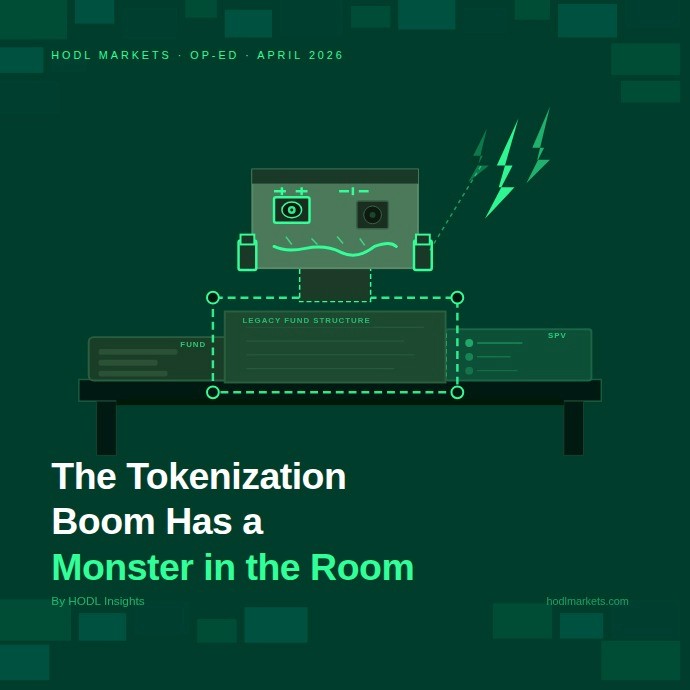
The Real World Asset (RWA) space has a Frankenstein problem. Old fund, new token, press release, repeat. It has been two years and the industry is still pretending the monster is a breakthrough.
Much of what gets called on-chain finance is an existing fund or legal vehicle with a token wrapped around it. The fund, the intermediaries, and the ownership structure behind it stay exactly where they were. What moved onto the blockchain was the record.
Chris Dixon wrote about this years ago, calling early crypto systems “hybrids,” meaning they were built on top of old infrastructure rather than replacing it. His point was that hybrid systems are usually where technologies begin, and the ones that eventually win are generally the ones rebuilt from scratch for the new medium rather than adapted from the old one. The a16z shorthand for this is “originate, don’t tokenize,” a way of saying that a token layered on top of an existing fund changes the accounting, not the underlying mechanics of how that fund operates. It is worth noting that Dixon's critique assumes the hybrid is a choice. For many regulated products, it is not. TradFi rules require custodians and a documented right to intervene; without those and you'll fail compliance before you launch.
Some builders are working within hybrid structures because the rules give them no other option. Conflating the two weakens the argument. So we must also consider the landscape in which builders operate.
The GENIUS Act, signed in July 2025, established the first federal framework for payment stablecoins. The CLARITY Act, which passed the House 294 to 134 and is working through the Senate with a White House target of July 4 passage, would resolve the jurisdictional fight between the SEC and CFTC over digital asset markets. Neither covers how strategy frameworks get structured and originated on-chain. The custody requirements and administrator mandates that govern that are decades old and unchanged. Nobody in Congress is working on them yet. The GENIUS Act and the CLARITY Act are the first two chapters of a regulatory framework that needs a third. Without it, native on-chain origination stays illegal on paper regardless of what the technology can do.
Most of what gets called RWA tokenization today is still in that first camp, and it makes life harder for anyone trying to build seriously on top of it. Every issuer builds their legal wrapper differently, so each product requires its own round of structural due diligence. At HODL Markets, our platform provides technology infrastructure that supports access to systematic investment strategy frameworks developed by third-party managers, made available as on-chain assets. The strategy and strategy signals remain proprietary to the external managers, HODL technology and the proprietary vaults enable Eligible users¹ access to these strategy frameworks through our platform without the structural constraints that have historically kept hedge fund strategies out of reach.
When everything runs on integrated infrastructure rather than several legacy systems bolted together, there are fewer points where something breaks between the strategy and the person trying to access it.
Ten years from now this market will probably look very different from how it looks today. Part of that shift is already visible in the direction markets are moving more broadly, toward longer trading windows, more continuous settlement, and infrastructure that does not go offline at the end of a business day. The products that survive in on-chain finance will most likely be the ones built for continuous markets from the start, and getting there requires doing the infrastructure work long before the products are ready to be talked about publicly. That is less exciting to announce but it is what the job actually requires.
—
¹ Access to strategy frameworks made available through HODL Markets is subject to applicable laws and regulations and restricted to eligible users meeting applicable requirements in their jurisdiction.
DISCLAIMER
This piece is written for informational and discussion purposes only. Nothing here constitutes investment advice, a financial strategy recommendation, a solicitation, or an offer of any kind. HODL Markets is a technology infrastructure provider and does not provide investment advice nor act as an investment adviser, broker-dealer, or securities dealer. Strategy frameworks referenced herein are developed by independent third-party managers. HODL Markets does not manage, custody, or control user assets, and is not responsible for the performance of referenced strategy frameworks. Readers should consult their own independent legal, financial, and tax advisers before making any financial decision.